The White Wonderland: A Guide to the Ultimate Winter Spiti Road Trip
The silence of Spiti in winter is not empty; it is full of answers.
By Ajit Brar
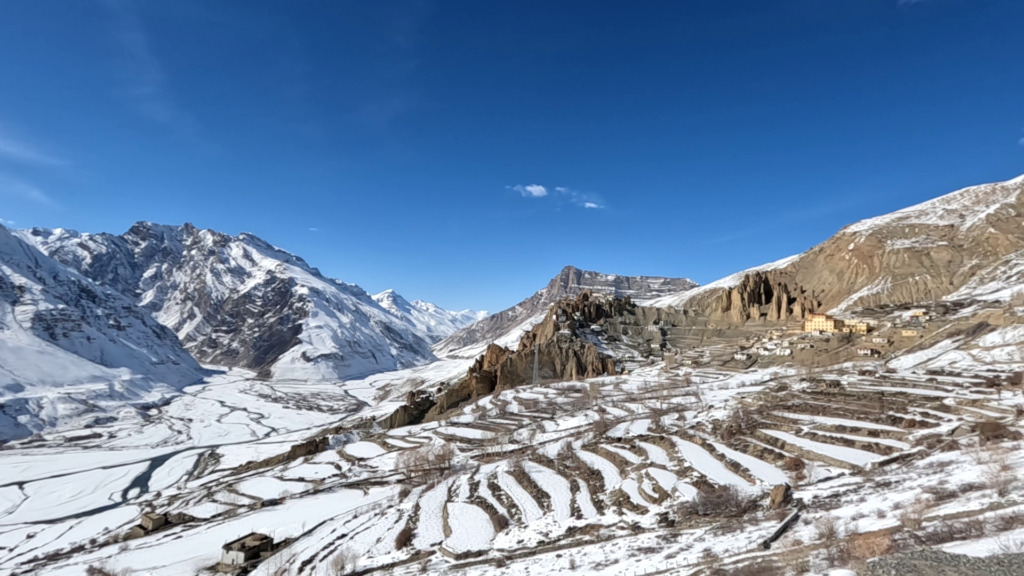
If you’ve seen Spiti Valley in summer, you’ve seen its colors. But if you visit in winter, you see its soul. A Winter Spiti road trip is not just a vacation; it’s an expedition into a frozen, starkly beautiful world where temperatures drop to -30°C and life moves at the rhythm of survival and ancient tradition.
Ready to trade comfort for the adventure of a lifetime? Here is your complete guide to conquering the “Middle Land” this winter.
Why a Winter Spiti Trip is So Exciting
While summer brings tourists on motorbikes, winter belongs to the true explorers. Here is why you should go now:
- The “Ghost of the Mountains”: Winter is the prime season for the Snow Leopard expedition Spiti. As the prey (Blue Sheep) moves down to lower altitudes, the elusive Grey Ghost follows, making sightings in Kibber and Pin Valley highly probable.
- A World of White: The barren brown mountains transform into a monochromatic masterpiece of white snow and blue sky.
- Frozen Waterfalls: Witness waterfalls suspended in time, hanging like crystal chandeliers from cliff faces.
- Authentic Culture: With no casual tourists, you experience the genuine warmth of Spitians. You’ll likely sit around a tandoor (heater) in a homestay, sipping butter tea while locals share folklore.
Top Things to Do & Places to Explore
1. Spot the Snow Leopard in Kibber
Kibber Wildlife Sanctuary is the global capital for snow leopard sightings. You will need patience, good optics, and a local guide. Even if you don’t see the cat, the Red Fox and Blue Sheep are common sights.
2. Visit the Ancient Monasteries
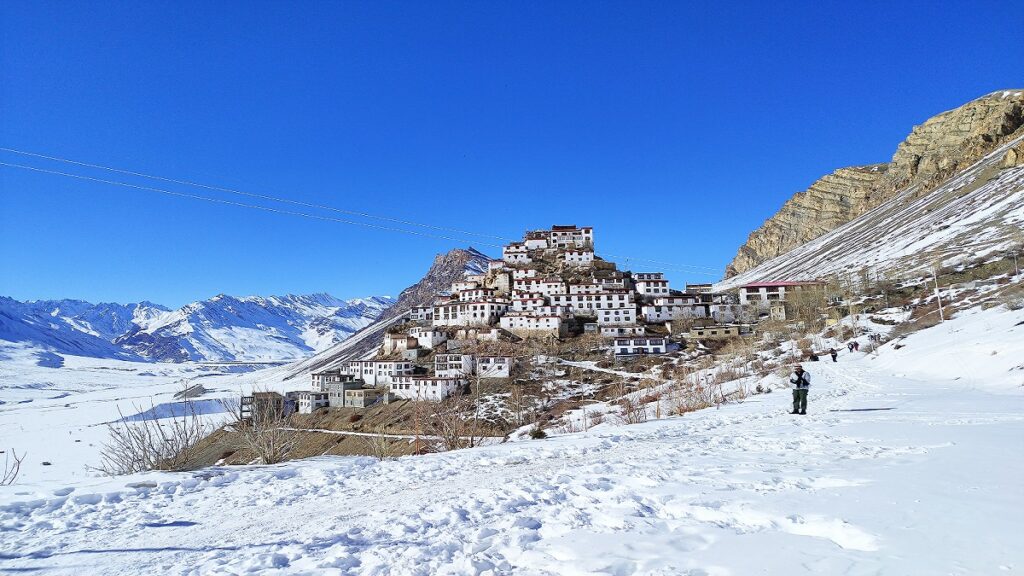
- Key Monastery: The most iconic sight in Spiti looks surreal surrounded by a sea of white. The monks here are incredibly welcoming in winter.
- Tabo Monastery: Known as the “Ajanta of the Himalayas,” its mud walls stand in stark contrast to the snow.
- Dhankar Monastery: Perched precariously on a cliff, the views of the confluence of the Spiti and Pin rivers (often frozen) are unmatched.
3. The Highest Villages Loop
Hire a local 4×4 to take you to Komic (world’s highest motorable village), Hikkim (send a postcard from the highest post office), and Langza (famous for its fossils and the giant Buddha statue watching over the white valley).
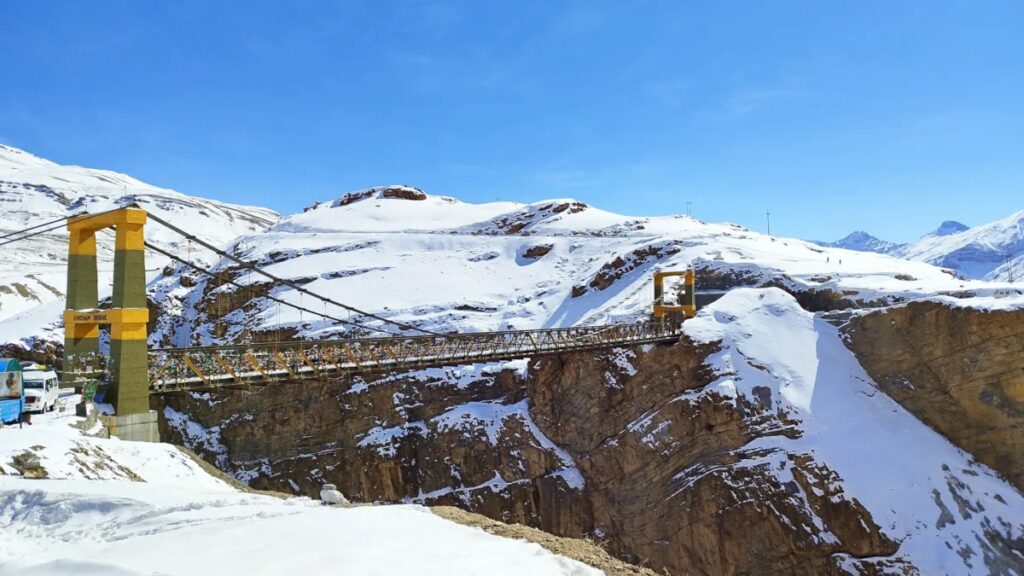
4. Chicham Bridge
Drive over Asia’s highest suspension bridge. In winter, looking down into the 1,000-foot deep gorge is spine-chilling.
How to Reach Spiti Valley in Winter
Crucial Note: The Manali to Kaza road is CLOSED in winter (usually from mid-October to May) due to heavy snow at Kunzum Pass.
The Only Way In: The Shimla-Kinnaur Route
You must enter and exit via Shimla. This route is longer but remains open year-round (barring temporary blockages due to snow).
- Route: Shimla -Narkanda- Rampur -Reckong Peo -Nako -Tabo -Kaza.
- Vehicle: A 4×4 SUV (Toyota Fortuner, Mahindra Thar, etc.) is mandatory. 2WD cars will get stuck. Snow chains are highly recommended.
- Public Transport: HRTC buses run from Shimla to Reckong Peo and then to Kaza, but they are erratic in winter. Hiring a private taxi with an experienced local driver is the safest bet.
Important Tips to Plan This Trip
1. Acclimatization is Key
Do not rush. The air is thin, and the cold constricts your blood vessels.
- Suggested Stop: Spend a night in Kalpa or Reckong Peo before heading to Kaza to let your body adjust.
2. The Toilet Situation
Pipes freeze in winter. Most hotels and homestays will offer dry compost toilets (a hole in the ground). You will not get running water; you will be given buckets of hot water for washing. Be mentally prepared for this.
3. Packing Essentials (Layering is Life)
- Base Layer: Merino wool thermals (top and bottom).
- Mid Layer: Fleece jacket + Down jacket (feather).
- Outer Layer: Windproof and waterproof shell/parka (rated for -20°C).
- Extremities: Two pairs of woolen socks, insulated waterproof boots (Quechua/Decathlon has good snow trek options), heavy gloves, and a woolen cap that covers ears.
- Must-Haves: Sunglasses (snow blindness is real), sunscreen, lip balm, and a thermos flask.
4. Cash and Connectivity
- ATMs: ATMs in Kaza are often out of order or frozen. Carry enough cash from Shimla/Rampur.
- Network: Only BSNL / MTNL postpaid works reliably. Jio/Airtel might work in Kaza town but will disappear in villages.
5. Medical Safety
Carry a kit with Diamox (for AMS – consult your doctor), painkillers, and motion sickness meds. The nearest reliable hospital is far away in Shimla.
Suggested 7-Day Winter Itinerary
- Day 1: Reach Shimla/Narkanda.
- Day 2: Drive to Kalpa (Stay for acclimatization & views of Kinner Kailash).
- Day 3: Drive to Tabo (Visit Nako Lake en route).
- Day 4: Drive to Kaza (Visit Dhankar Monastery en route).
- Day 5: Explore Key Monastery, Kibber, and Chicham Bridge.
- Day 6: Drive back to Kalpa/Reckong Peo.
- Day 7: Drive back to Shimla.
You Might Also Like To Read:
Throttle Therapy: Top 15 Bike Ride Destinations in India to Conquer This Winter
Do comment Your Thoughts about The article.
Subscribe To My You tube Channel For Travel Video’s : Ajit Brar Vlogs.
You can use these pictures on your website. You can to do so for free as long as it is non-commercial use. Don’t forget to give credit to the author.
Always happy to help any traveller with passion to travel and explore the hidden treasures in India. If you need any advise or guidance To plan your next getaway, I am always available anytime. Do drop a massage or comment. I will try my best to reply, resolve and guide you on basis on my experience to make your trip memorable.
This Page “The White Wonderland: A Guide to the Ultimate Winter Spiti Road Trip” contains affiliate or paid advertisement to help in maintaining the website.